Latest Blog Posts
Featured Blogs
Latest Blogs
Every one of our employees represents the spirit of our company.
We are a young and dynamic team working towards creating innovations.
Categories
- All
- IoT Security & Device Commissioning
- Embedded OTA Solutions
- Low-Power Embedded Systems
- Cellular IoT
- IoT Dashboard Solutions
- Machine Vision
- Healthcare IoT
- Smart Mining
- IoT-powered smart parking
- Clean Tech & Sustainability
- Predictive Maintenance
- LoRaWAN Security
- Automotive
- IoT Device Management
- SecureIoT
- SecureByDesign
- IoT Technology / Smart Systems
- Wearable Technology
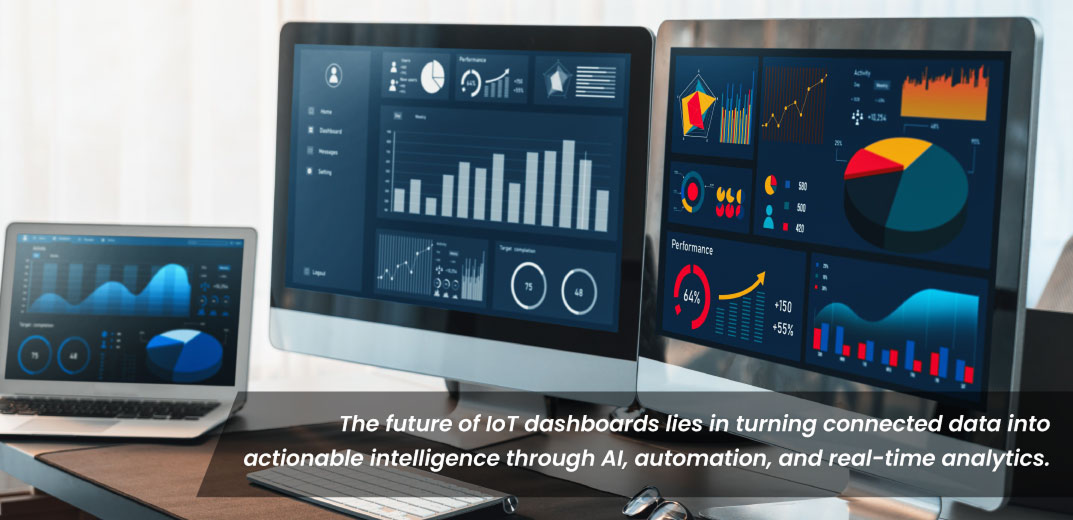
Imagine opening an IoT dashboard ten years ago. You would likely see a few graphs, device status indicators, and perhaps a table of sensor readings. At that time, simply accessing real-time data from connected devices felt revolutionary. Businesses were excited to monitor equipment remotely, track environmental conditions, and visualize operational metrics from anywhere in the world. Fast forward to 2026, and the expectations have changed dramatically. Organizations no longer need dashboards that merely display information-they need platforms that can interpret data, predict failures, manage thousands of connected devices, automate workflows, and support critical business decisions. As IoT deployments become larger and more complex, dashboards are evolving into intelligent operational hubs rather than simple monitoring interfaces.
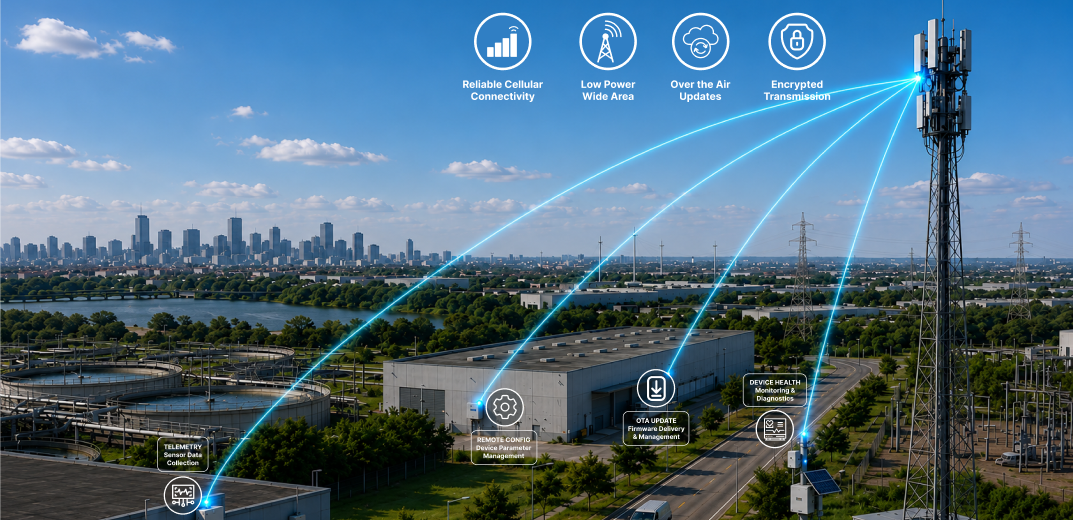
IoT devices deployed across agriculture, utilities, industrial facilities, and smart city infrastructure often operate in the field for years. As software bugs, security threats, and evolving requirements emerge, keeping these devices updated becomes essential.
Cellular Over-the-Air (OTA) updates address this challenge by enabling firmware updates to be delivered remotely through cellular networks such as LTE-M and NB-IoT. This eliminates the need for costly on-site maintenance while ensuring devices remain secure, reliable, and up to date throughout their operational lifecycle.
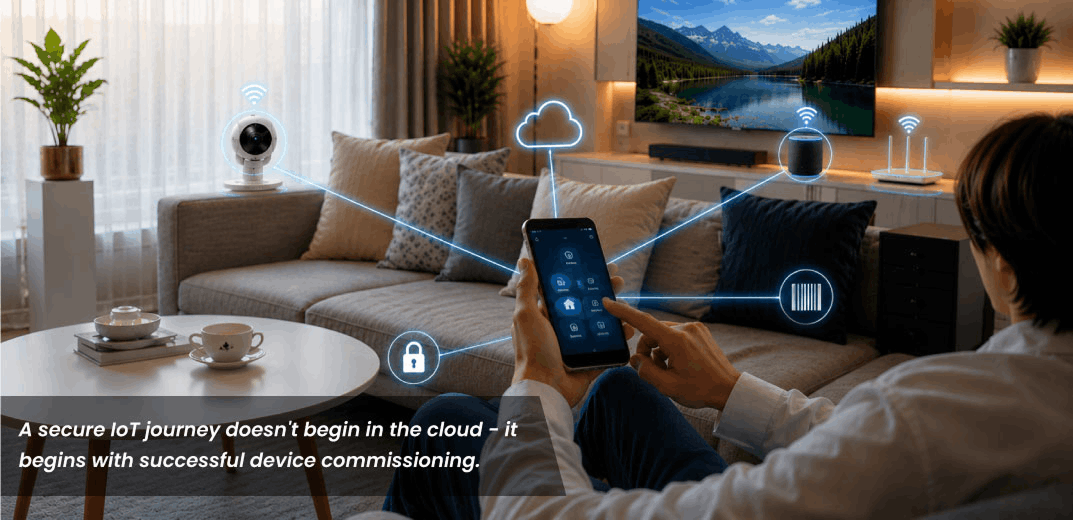
Every IoT device, whether it is installed in a smart home, a hospital, or an industrial facility, needs to go through a setup process before it can start communicating and performing its intended functions. This process is known as device commissioning.
IoT device commissioning involves securely configuring, authenticating, and connecting a device to the network and cloud platform, ensuring it is ready for reliable and secure operation.
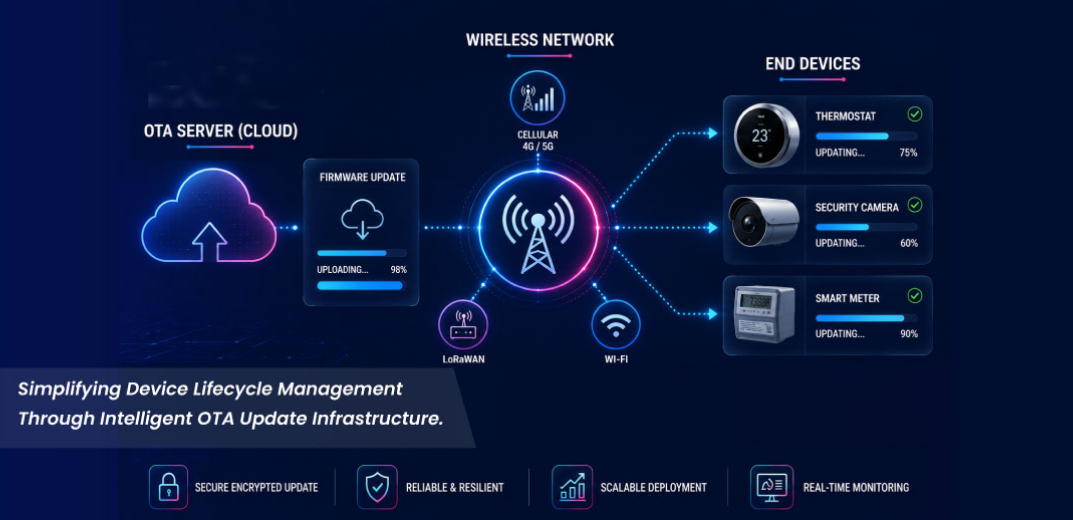
Over-the-Air (OTA) updates have become an essential part of modern IoT ecosystems. As connected devices are often deployed in remote or large-scale environments, physically updating firmware is time-consuming, expensive, and sometimes impossible.
OTA technology enables manufacturers to remotely update firmware, security patches, configurations, and device features without requiring physical access to the device.
From smart home products and industrial automation systems to healthcare wearables and agricultural sensors, OTA updates help maintain device performance, security, and long-term reliability.
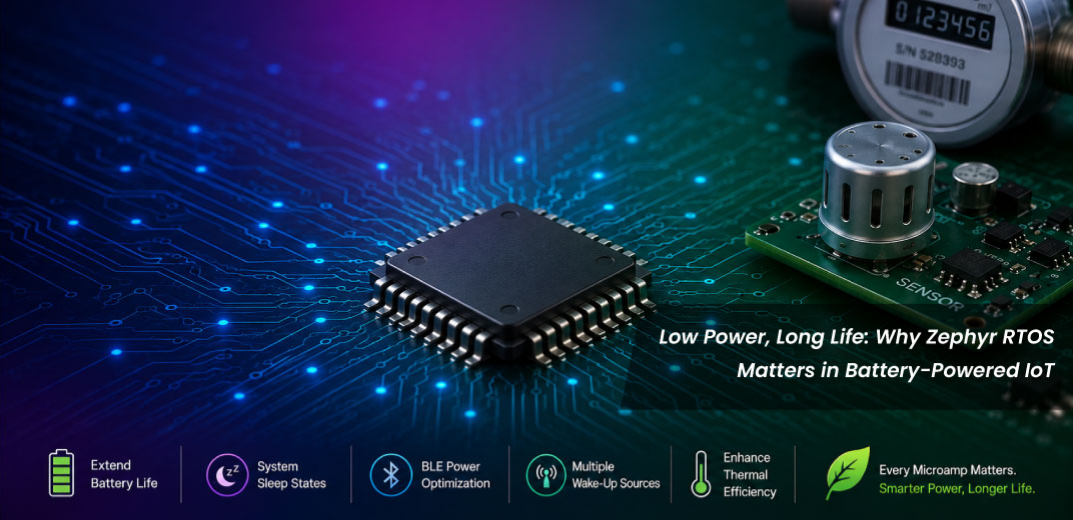
The rapid growth of IoT has created a world filled with connected sensors, trackers, smart meters, wearable devices, and industrial monitoring systems. Most of these devices operate on batteries and are often deployed in locations where frequent charging or maintenance is impractical. In such systems, power management is not just an optimization feature - it is one of the most critical design requirements.
This is where Zephyr RTOS becomes highly valuable. Zephyr is an open-source real-time operating system designed specifically for resource-constrained embedded devices. It provides flexible and efficient power management features that help developers build ultra-low-power IoT applications without sacrificing performance or connectivity.
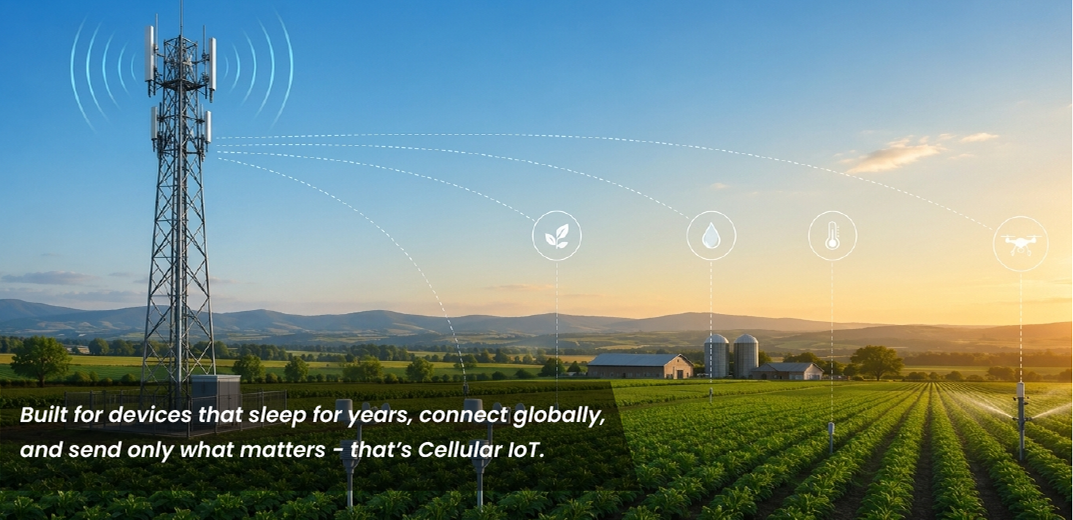
Cellular IoT connects smart devices using networks like NB-IoT and LTE-M with very low power consumption. It is designed for devices that send small amounts of data and need long battery life. Features like PSM and eDRX help devices sleep most of the time to save energy.
This makes Cellular IoT ideal for sensors, trackers, smart meters, and remote monitoring applications.
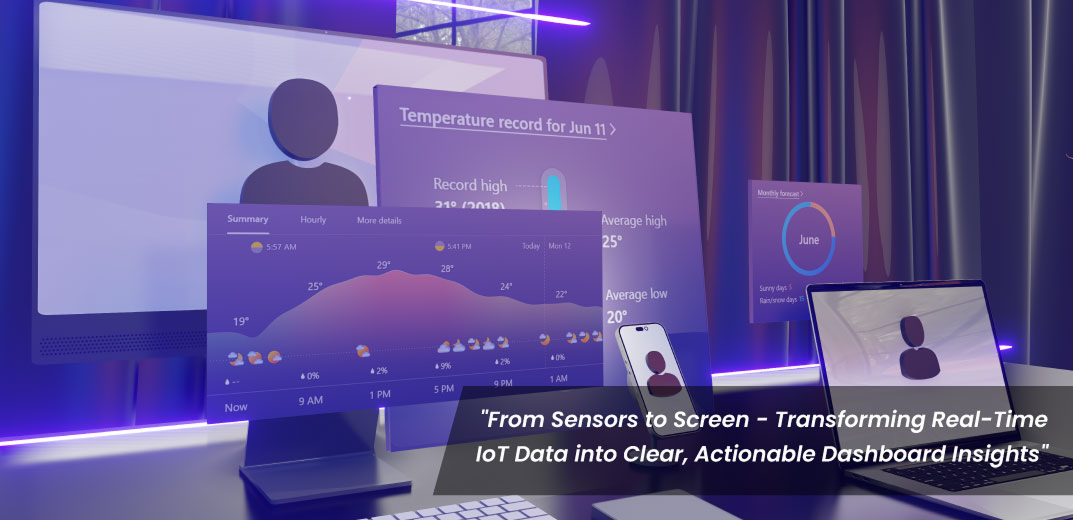
Behind every successful IoT system is a powerful web dashboard that transforms raw device data into real-time insights, intelligent automation, and centralized control.
An IoT dashboard is not just a monitoring screen - it is the operational core of the entire connected ecosystem.
A robust IoT dashboard requires a combination of scalable backend systems, real-time communication, modern frontend frameworks, and strong security practices. It serves as the interface where complex device data is transformed into meaningful insights and actionable operation.
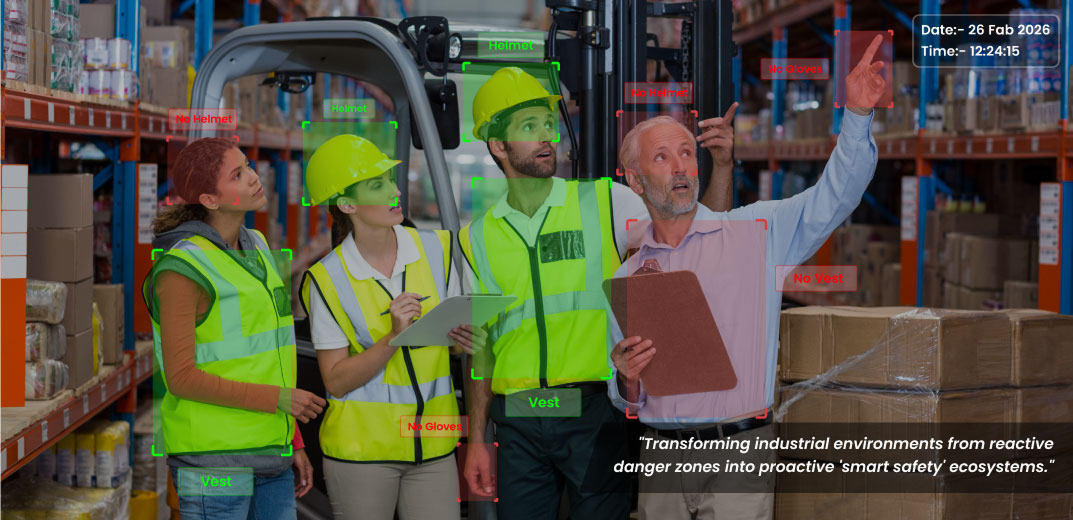
In the modern industrial landscape, the mantra has shifted from "Safety First" to "Safety Always." While traditional safety protocols-like physical barriers, manual audits, and warning signs-have saved countless lives, they share a common vulnerability: they are often reactive and dependent on human vigilance.
As we move deeper into the era of Industry, where humans and machines work in closer proximity than ever before, a new sentinel has emerged.
Machine Vision (MV) is no longer just a tool for quality control on an assembly line. Today, it serves as an "invisible shield," using advanced optics and artificial intelligence to monitor, predict, and prevent workplace accidents in real-time.
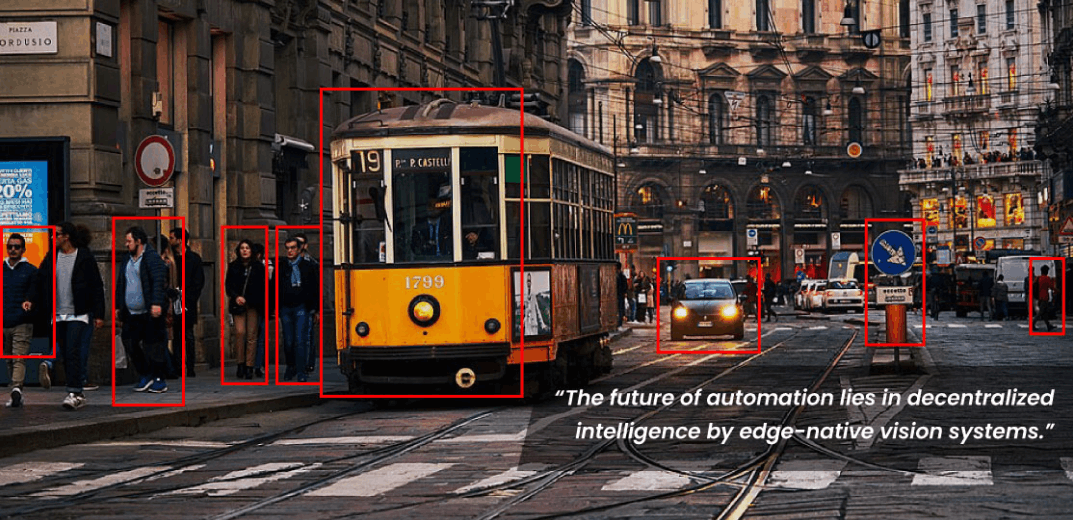
Efficiency in Artificial Intelligence (AI) utilizing vision systems is the core of any well-designed unmanned system. Whether managing autonomous vehicles (UAVs) or industrial robots, the ability to process data at the "system edge"-physically close to cameras and sensors-represents a fundamental breakthrough for manufacturing and logistics.
To maximize the power of AI, systems traditionally required high compute overhead, often handled by centralized GPU clusters. However, the industry is shifting toward edge-native hardware that manages large data streams with minimal power draw and latency.
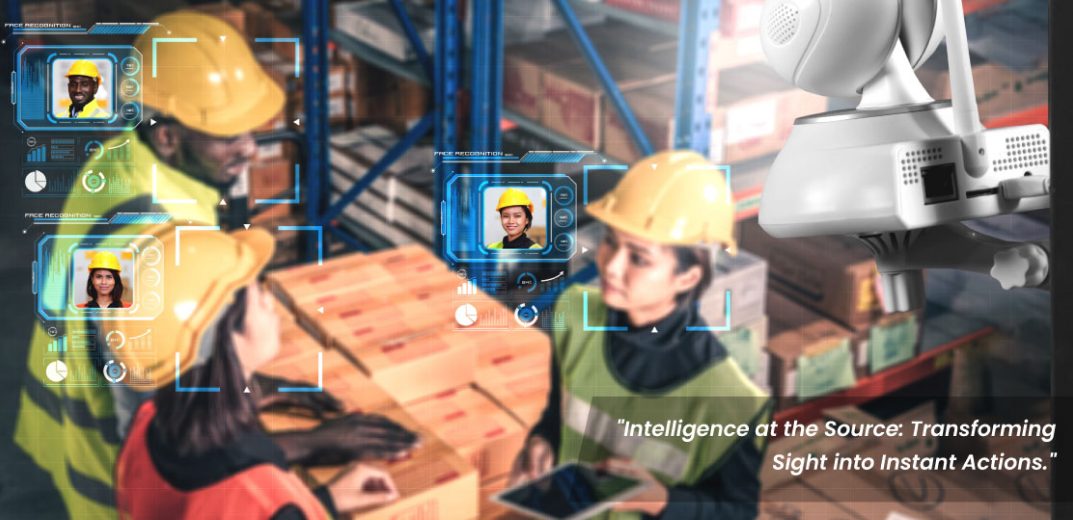
Imagine a busy manufacturing floor where heavy machinery operates alongside human workers. Suddenly, a worker slips near an active robotic arm. In a traditional setup, the overhead camera captures the video, sends it to a remote server, and waits for a response. That round trip can take ~800 milliseconds. By the time the stop signal arrives, the damage is already done.
Now, imagine the camera as the brain itself.
The camera itself detects the fall and cuts power in just 10 milliseconds - without relying on the internet.
That’s not just faster processing, That is a real-time reflex.
This is the power of Edge Machine Vision.


